Brand guidelines8 min read
Brand guidelines vs style guide vs brand book: which one do you need?
Three names, used loosely by everyone including designers. Here’s what each document actually covers, how many pages it tends to run, and which one your business needs.
Javeria Hareem
Logo & Brand Designer, founder of Jayy Studio
 Brand guidelines
In this article
Someone has told you that you need brand guidelines. Someone else said a style guide would do. A third person mentioned a brand book, and now you’re not sure whether those are three products or one.
The honest answer is that the names overlap, and designers use them loosely. Me included: I have called the same document “the guidelines” and “the brand book” in one breath. But the brand guidelines vs style guide question is worth settling before you pay for one, because what you ask for is what you tend to get.
So here is how I separate the three, what each one actually covers, what the page counts look like on real projects, and how to pick the one that fits the size of your business right now.
Brand guidelines vs style guide vs brand book: what people mean by each
Style guide
The narrowest of the three. A style guide is the rulebook for how the brand looks: which logo version goes where, clear space and minimum size, the exact colour values in HEX, RGB and CMYK, the typefaces and how they pair, how photographs should be shot or chosen, and the grid that layouts sit on. It is written for anyone who makes things: designers, printers, developers, the person doing your Instagram. It documents the visual identity; if that term is new, start with what brand identity is.
If you’re a solo founder with a logo and a website, this is usually what you need, and it can be eight or twelve pages without losing anything.
Brand guidelines
Everything in the style guide, plus the parts of the brand that aren’t visual. How the brand sounds in a caption, a proposal and a reply to a complaint. Words it uses and words it avoids. How it behaves on each channel, because the way a brand shows up on LinkedIn is not the way it shows up on a shop sign. Sometimes a section on the audience and the competitors, so a new hire understands who all of this is for.
This is the document I make most often, because most of my clients have, or are about to have, more than one person touching the brand.
Brand book
The guidelines, plus the story. Why the business exists, what it believes, who it is for, how it wants to be described. A brand book is written to be read from the front, not just looked up, and it tends to be designed as a piece of the brand in its own right: a printed book for the office, a PDF a new employee gets on day one. It is as much about culture as it is about the logo.
The same chapters, at five different depths
The easiest way to see the difference is to look at real page counts. These are all documents I made, for very different businesses, and the spread says a lot.
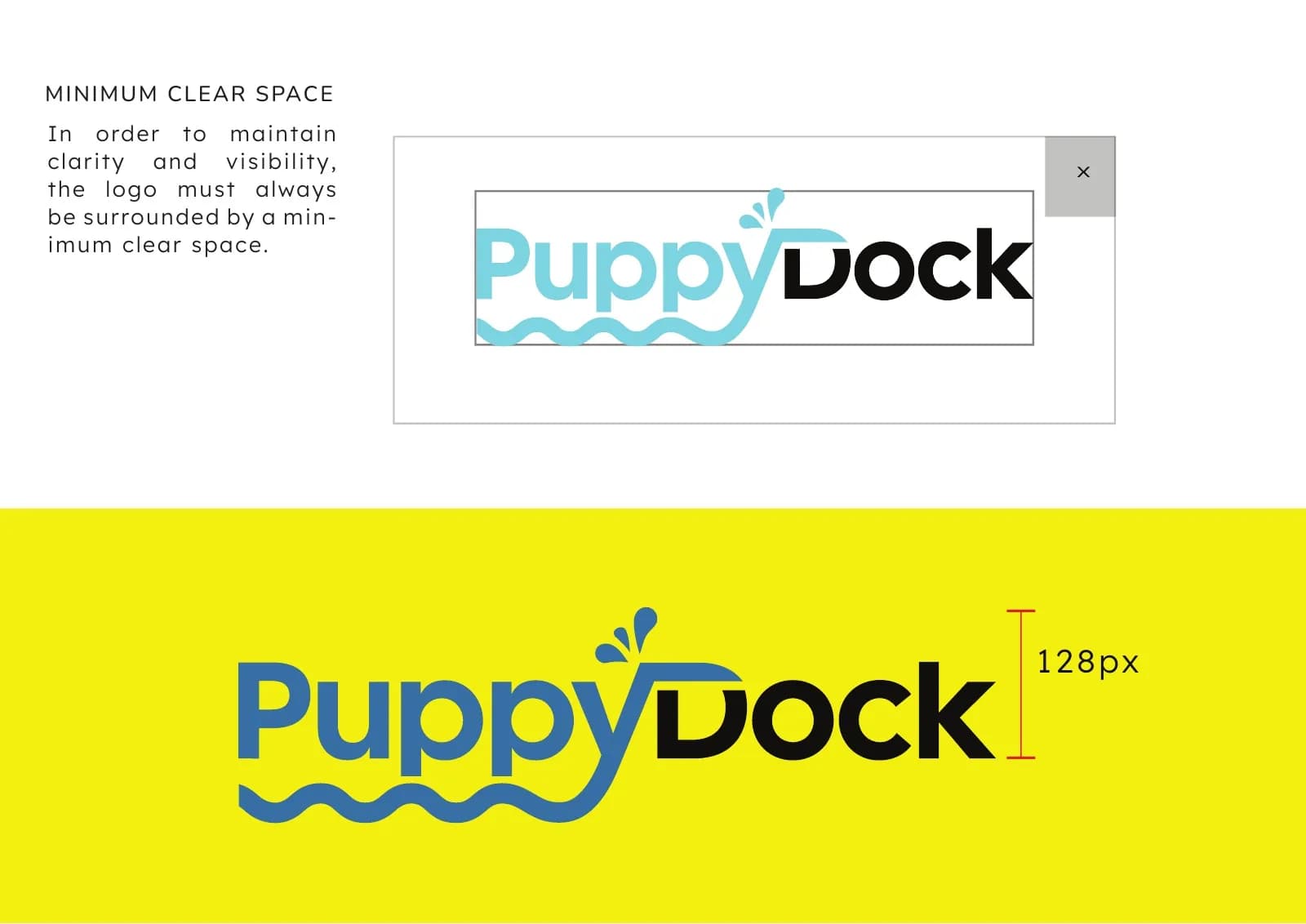
PuppyDock, a pet-safety product, got a 12-page guide: the logo, the colours, the type, clear space, app icons, a page of don’ts. That was the right size for a brand that lives on packaging, a website and social.
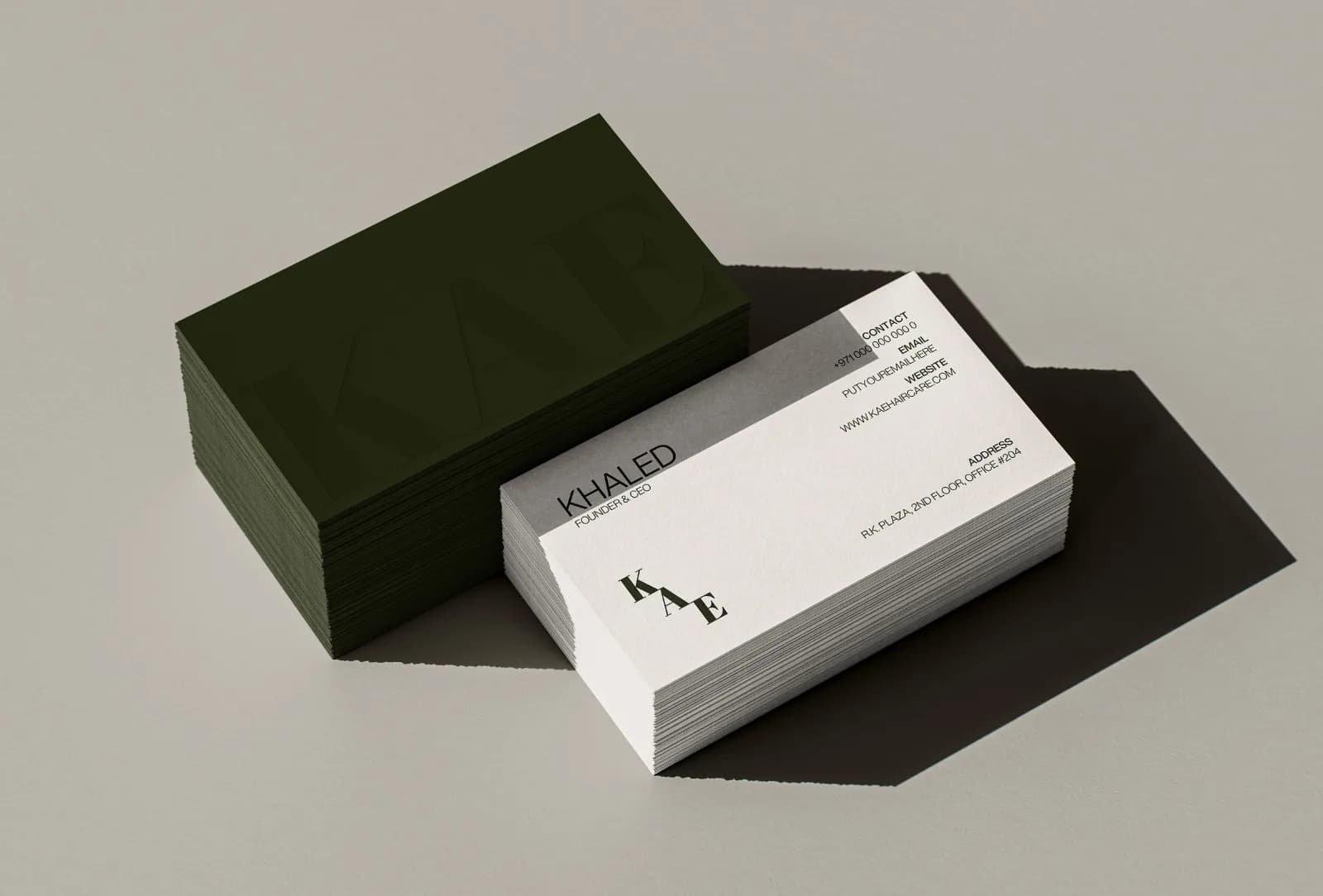
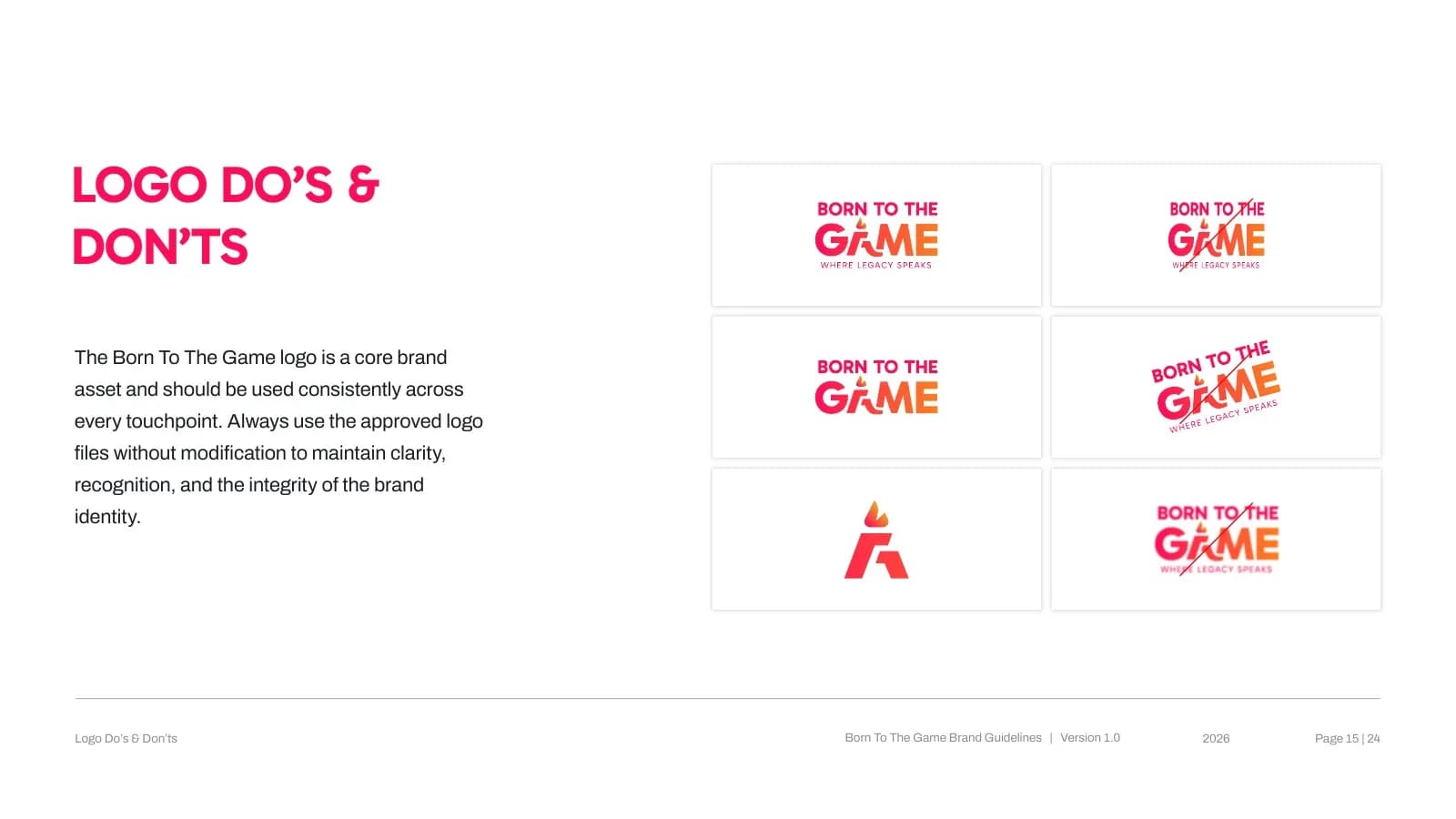
KAE Hair Care ran to 17 pages, because packaging is part of it: bottle, carton, retail bags and boxes. Aurexon, a construction firm, got 21, because sign makers, printers and developers all needed a reference they could follow without ringing me. Born To The Game is 24, with lock-up, clear-space and misuse rules because partners put that logo on kit, and kit is where logos get stretched.
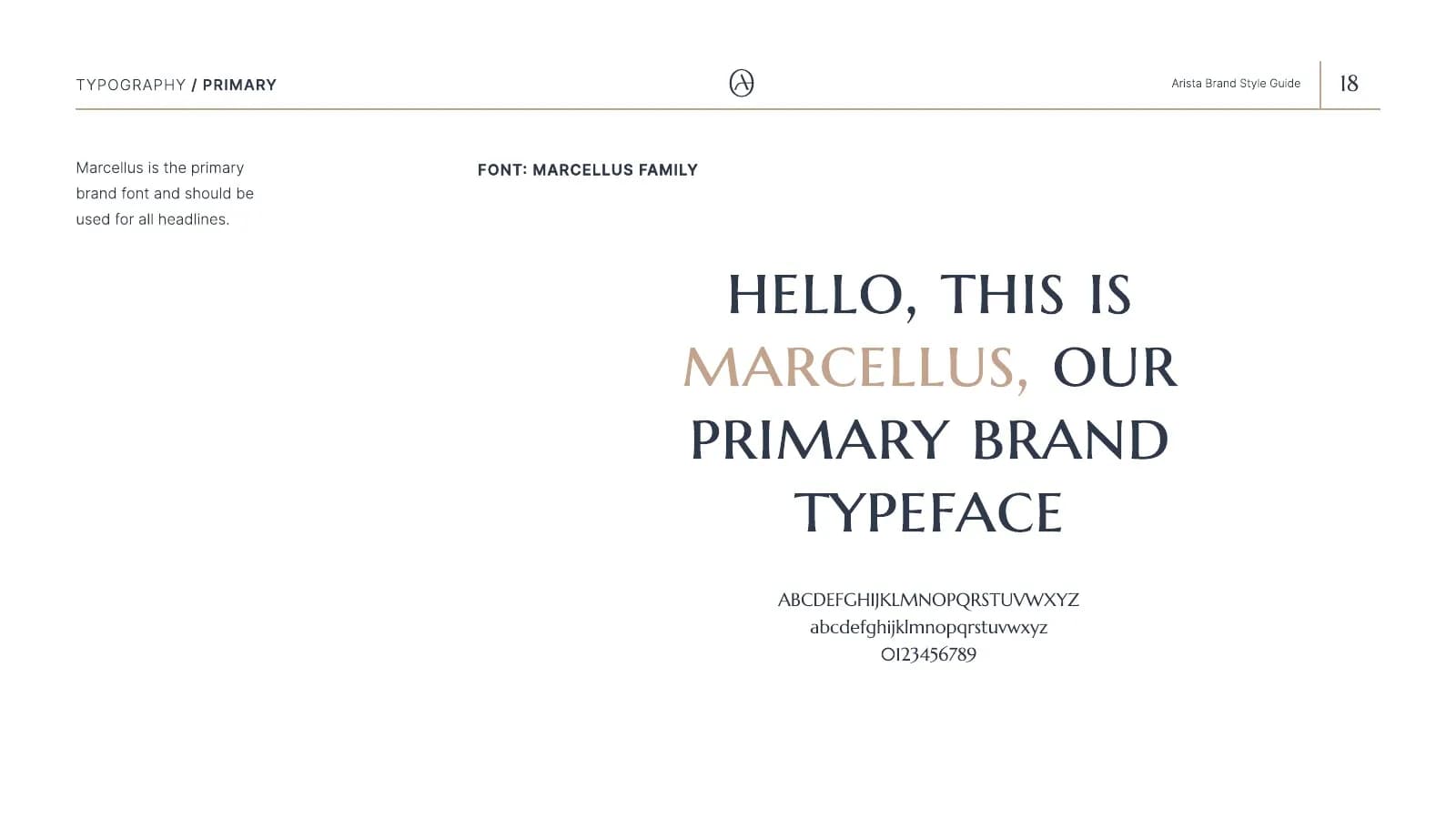
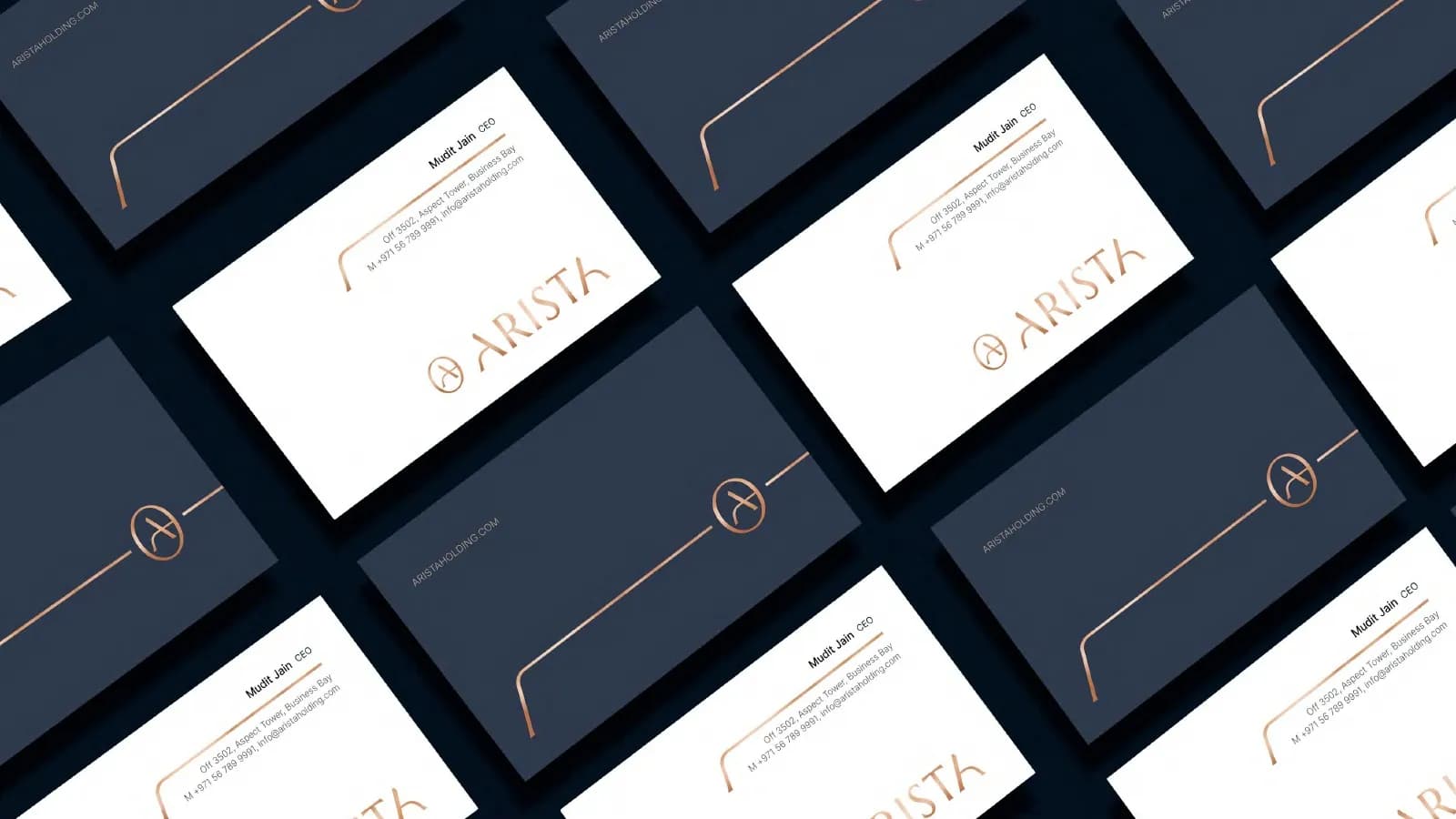
And Arista Living, a luxury real estate brand, is 45 pages. Not because the brand is more complicated, but because agents, suppliers, a sub-brand and a whole range of applications, from vehicle livery to event backdrops, all needed to be shown rather than described.
Pages aren’t quality. A 12-page guide done well beats a padded 40-page one. The number is really a measure of how many people and how many surfaces the document has to serve.
Which one you need, by the size of your team
The question I ask clients is not “how big is your business” but “how many hands touch the brand in a normal month”. That number decides the document.
Just you, maybe a freelancer now and then. A style guide. Ten to fifteen pages. You need the logo rules, the colour codes, the fonts and a don’ts page so the freelancer doesn’t improvise. Voice and story live in your head, and that is fine for now.
A team of three to ten. Brand guidelines. Once someone else writes your captions, builds your decks and answers your customers, the visual rules aren’t enough. You need the voice written down, with on-brand and off-brand examples side by side, and a page per channel. This is where most of my clients land.
Agencies, franchisees, distributors, investors. A brand book, or guidelines with a proper narrative chapter at the front. When people outside the business represent it, they need to understand it, not only reproduce it. The story section is what stops a partner producing something technically correct and completely wrong in tone.
What they cost, relative to each other
I’m not going to put numbers on this, because the cost depends on whether the identity already exists. But the proportions are fairly stable.
A style guide is the cheapest, because it mostly documents decisions that were made during the identity work. If I designed your logo and colours, the guide is a few days of writing it all down properly. Brand guidelines take longer, because voice and channel rules are new thinking, not documentation, and they need conversations with you. A brand book is a publication: design plus copywriting plus, often, print production, and it sits at the top.
In my own projects, the guide is usually bundled into the brand guidelines service or the bigger identity packages rather than sold on its own, because a guide for an identity I didn’t design means reverse-engineering someone else’s choices first. That can be done, and I do it, but it costs more than you’d expect.
The seven sections every one of them needs
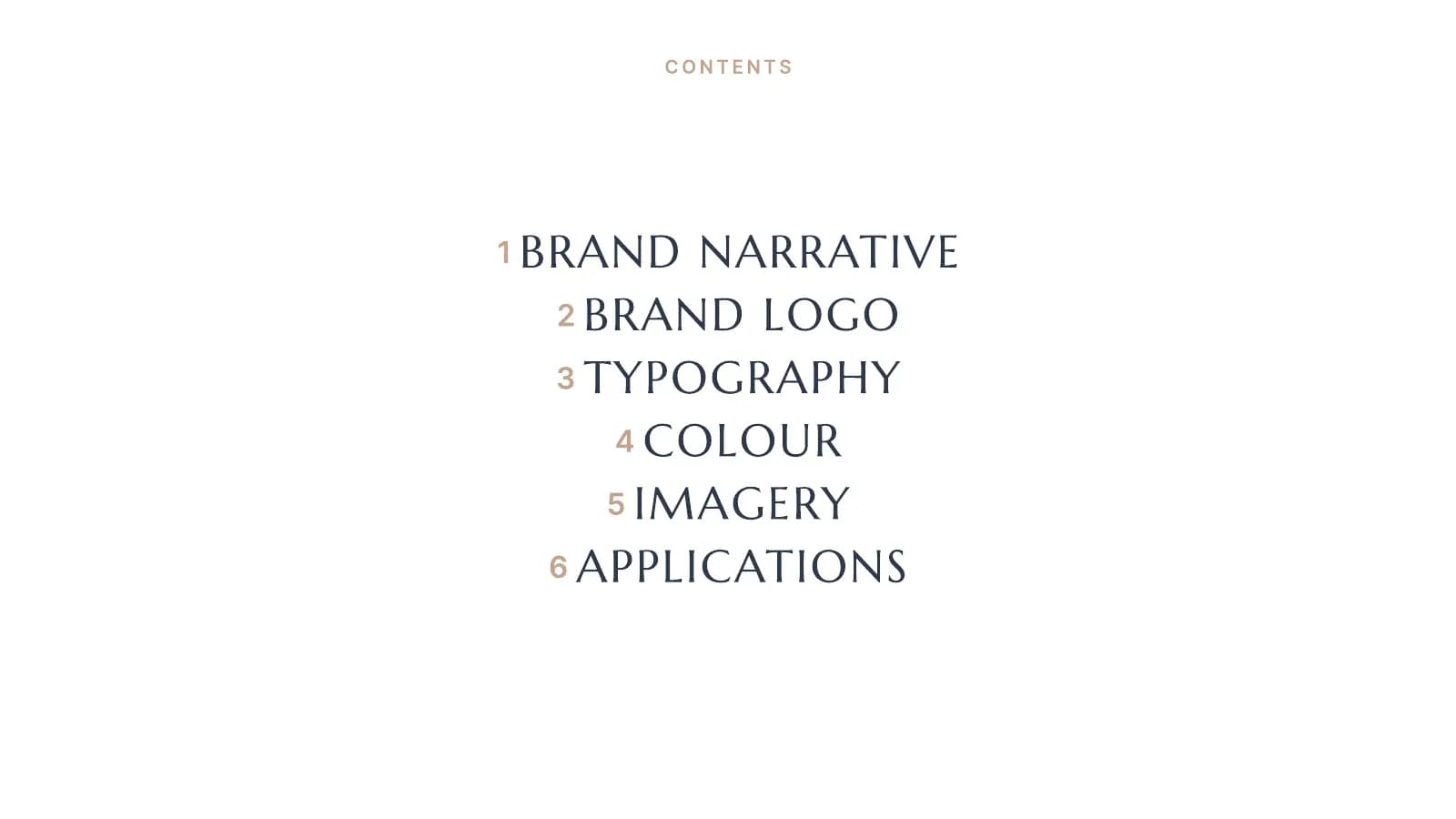
Whatever you call it and however long it runs, the document has to cover the same ground: logo usage, the colour system, typography, imagery, voice, layout and a page of don’ts. I wrote those up properly, with a checklist you can tick through, in the 7 things every brand guidelines document must include. If your current document is missing any of them, that is where your brand is drifting, regardless of what the cover says.
The other thing every version needs, and the thing most often left out, is the file list. A guide that says “use the primary logo here” without telling people which file that is, and in which format, sends everyone back to guessing. The logo file formats post covers what should be in that folder.
What to ask for
When you brief a designer, skip the label and describe the situation. How many people make things with your brand, which surfaces it lives on, and whether anyone outside the business will ever represent it. A good designer will tell you which document that calls for, and roughly how long it should be. If they quote you 40 pages for a one-person business, ask what the extra pages are for.
If you’d like a second opinion on a guide you already have, or you’re working out what to commission alongside a new identity, send me a few lines about the business. I’ll tell you what I’d make and what I wouldn’t bother with. The answer is quite often “a shorter document than you were quoted for”.
Questions founders ask me
Not quite. A style guide covers the visual rules only: logo, colour, type, imagery and layout. Brand guidelines include all of that and add voice, tone and how the brand behaves on each channel. In everyday conversation the two names get swapped, so check what a designer means before you agree a price.