Cost and hiring9 min read
How much does a logo cost in 2026? Freelancer vs studio vs agency
Honest price ranges for every way of getting a logo, what the money actually pays for, and the hidden cost of the cheap option.
Javeria Hareem
Logo & Brand Designer, founder of Jayy Studio
In this article
“How much does a logo cost?” is the question I get asked more than any other, and the honest answer, anything from $5 to $100,000, is useless on its own.
So this is the long answer on logo design cost: what each bracket actually buys you, what moves the number up or down, where the cheap option quietly costs more, and how I price a logo myself. I have designed more than a thousand of them, starting at $5 on Fiverr and working up from there, so I have seen every bracket from the inside.
If you only want a number for your own project, skip to the end and message me. I’ll tell you where it sits.
Logo design cost in 2026, bracket by bracket
These are typical ranges, not quotes from any particular company. They move with the designer’s experience and with your country, but the shape of the market has been stable for years.
| Option | Typical cost | What you get | Turnaround | The risk |
|---|---|---|---|---|
| Marketplace gig (Fiverr and similar) | $5 to $100 | A mark, often from a template or a stock shape. PNG and JPG, sometimes a vector. | Hours to 2 days | The same mark may be sold to others. No questions asked, no system, unclear ownership. |
| Template tool (Looka, Canva, AI generators) | Free to about $100 | A generated logo you pick from a grid, with basic colour and font options. | Minutes | Thousands of near-identical marks exist. Vectors and ownership depend on the plan. Nobody checks it works small or in print. |
| Freelance designer | $300 to $3,000 | Questions first, several concepts, revisions, a full file set, usage rules. | 3 days to 3 weeks | Quality varies widely. Check the case studies and the file list before paying. |
| Small studio | $2,000 to $15,000 | A strategy session, concepts, an identity system, often guidelines. | 3 to 8 weeks | You may never speak to the person drawing. Scope creeps on both sides. |
| Agency | $10,000 to $100,000+ | Research, workshops, a team, rollout support, full guidelines. | 2 to 6 months | Overheads you pay for whether you need them or not. Slow. |
A few things jump out of that table once you have lived inside it. The gap between the top of the marketplace bracket and the bottom of the freelance bracket is where most of the real quality difference lives. Above about $3,000 you are mostly paying for scope, more applications, more strategy, more people, rather than for a better mark.
What the price is actually paying for
A logo is a small file. The money goes on everything that happens before and after it exists.
Questions, first. Before I draw anything I want to know who you keep losing work to, what you want people to believe about you in the first three seconds, and where the mark will physically live. A sign maker, an embroiderer and an app store all make different demands of it. A $5 gig skips this entirely, which is how people end up with a beautiful logo that solves nothing.
Then concepts. Not one idea nudged three ways, but genuinely different directions, shown on a bottle or a shop sign rather than floating on white. Then revisions, which cost a designer real hours and are usually where the cheap brackets go quiet.
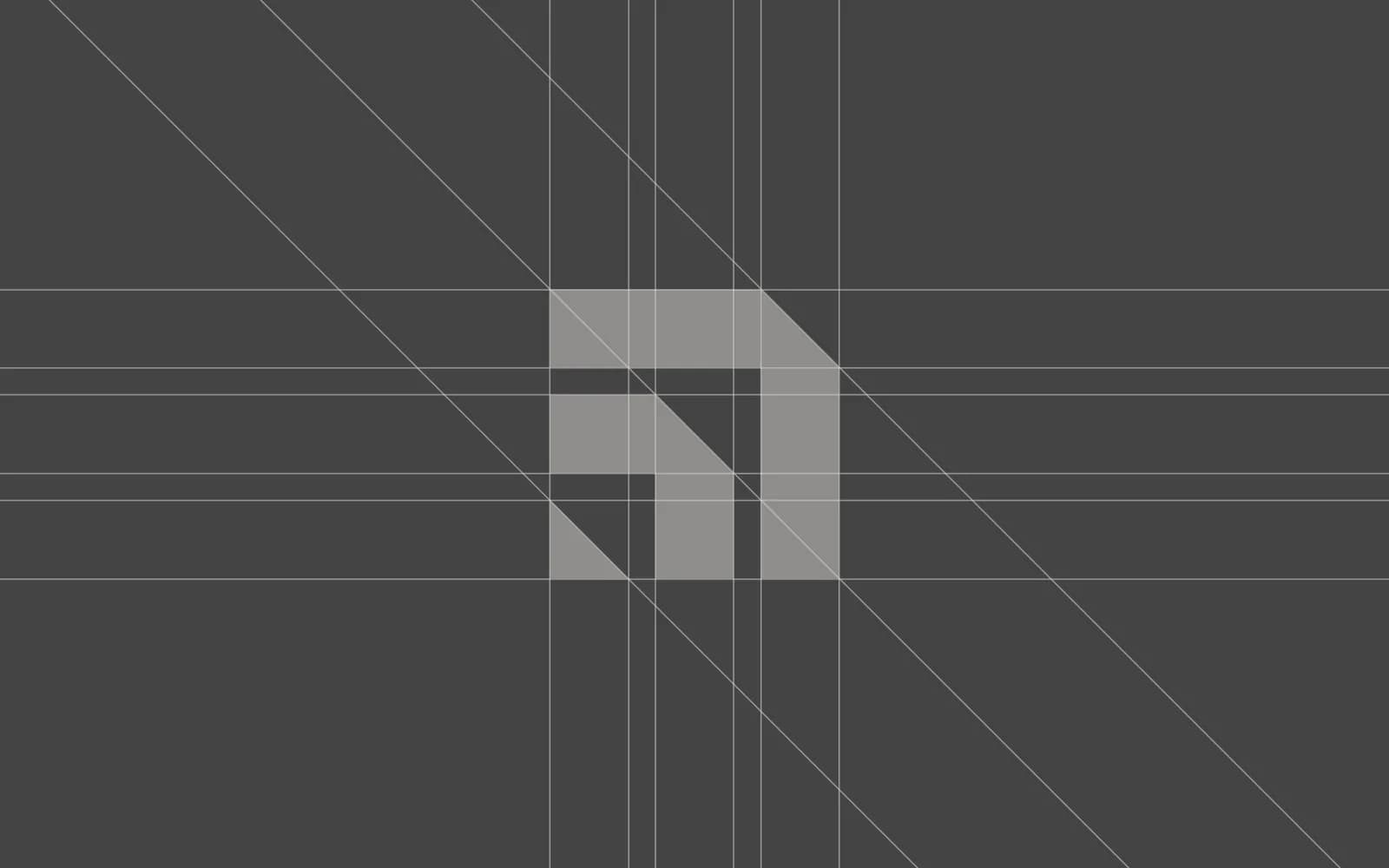
Then the file set. A finished logo is not one file, it is a folder: the main lock-up, a stacked version, the icon on its own, each in full colour, one colour and reversed out of dark, each as AI, EPS, SVG, PDF, PNG and JPG. Clear-space and minimum-size rules, so the next person cannot squash it. If a quote does not list these, ask, because producing them properly is a day of work on its own. I went through what belongs in a package separately.
And ownership. With me, you own the final files outright once the project is paid for. On a marketplace, read the small print: some sellers keep the right to resell elements, and some marks are templates you never owned in the first place.
Experience is the last driver, and the one that is hardest to see on an invoice. After a thousand projects I know, before I draw, that a thin script will fail on embroidery and that a horizontal lock-up will not fit a social avatar. You are paying for the mistakes I no longer make.
What a cheap logo costs later
Nobody budgets for the second logo. They should, because it is the most common outcome of the cheapest option.
The usual sequence goes like this. The $30 logo looks fine on the website. Six months later a printer asks for a vector and there isn’t one, so someone redraws it, slightly wrong. The embroiderer says the thin lines will not stitch. A competitor turns up with a mark from the same template. By the time you want to trademark the name, you discover you cannot. Each of these is a small invoice, and together they pass the cost of a proper logo within a year, with a worse result at every step.
I have covered Fiverr versus a designer in detail, including when the gig is the right call, because sometimes it genuinely is.
What you do not need to pay for
Some line items are padding, and knowing them helps you read a quote.
Twenty concepts: past about five, a designer is showing you the ideas they already rejected. A 45-page guidelines document for a business of one, when a short guide covers it until there is a team to follow it. A strategy workshop before you have a single customer. Rush fees, if you can give two weeks’ notice. Mood boards you will never open again. And a ‘trademark search’ from a designer, which is a browser search; if the name matters, pay a trademark lawyer instead.
How I price a logo
I work alone, from Lahore, and I give fixed quotes. You tell me what the logo has to do, I write back with a scope, a delivery date and a price, and that price does not move unless the scope does. My packages start at $99 for a starter logo, and the pricing page lists what each one includes. Most projects fall between about $99 and $1,500. A logo on its own sits at the low end; a full identity with guidelines and packaging sits at the top. Half is paid to book the slot, half before the final files go out, and you own everything once it is paid. There’s more on working with a brand designer in Lahore if you’re nearby or just curious.
That bracket is lower than a comparable designer in London or New York would quote, and the reason is boring: my overheads are lower, not my standards. You get the same questions, the same concepts shown in context, the same file set and the same rules a studio would hand you. A logo package usually takes three to five days; I wrote up what the timeline looks like if you want the day by day. If you are hiring from abroad for the first time, this post on hiring from Pakistan answers the questions people are usually too polite to ask.
When a $5 logo is fine, and when it isn’t
A cheap logo is fine when you are testing an idea and might kill it in a month. It is fine as a placeholder for a side project, a one-off event, a landing page that exists to see whether anyone clicks. Nobody should spend $1,000 on a logo for something that has not yet earned a domain name.
It stops being fine the moment the logo meets a printer, a product or an investor. Packaging, signage, uniforms and vehicles expose a weak mark immediately, and all of them cost far more to reprint than the logo would have cost to do properly. A pitch deck with a template logo tells the room something about how you make decisions. And if you ever want to own the name, you need a mark nobody else has.
Startups sit right on this line, so I wrote about logo design for startups on its own: what to buy pre-seed, and what can wait.
Work out your number before you ask for quotes
The useful question is not “what does a logo cost?” but “what does this logo have to do in the next two years?”. If the answer is a website and a social profile, a few hundred dollars with a good freelancer will cover it. If the answer includes packaging, print, a team and a trademark, budget for an identity rather than a logo, and read the comparison of freelancers and agencies before you shortlist.
When you have that answer, tell me about the project. You will get a fixed quote within a few hours, and if what you need is cheaper than me, I will say so.
Questions founders ask me
Because the word “logo” covers everything from a generated mark picked off a grid to a researched identity rolled out across a company. The drawing is a small part of the work. Questions, concepts, revisions, a complete file set, usage rules and the designer’s experience are what the price actually reflects.