Rebranding9 min read
Rebrand or refresh? How to tell which you need
Most founders who ask me for a rebrand need a refresh. A few who ask for a refresh need the opposite. Here is how to tell the two apart before you spend anything.
Javeria Hareem
Logo & Brand Designer, founder of Jayy Studio
 Rebranding
In this article
- What a refresh is, and what a rebrand is
- Rebrand vs refresh: the signs for each
- What each one costs you, in time and money
- The expensive mistake: rebranding when you needed a refresh
- Six questions I ask before recommending either
- What a refresh of your existing logo actually involves
- When to keep what you have
- What to do next
- Questions founders ask me
Every few weeks someone messages me to say they need a rebrand. When I ask what’s wrong, I hear: the website looks dated, the Instagram doesn’t match the business cards, and the only logo file is a blurry JPG from 2019.
That isn’t a rebrand problem. It’s a refresh problem, and the difference is a few days of work versus a few weeks and a full rollout. The opposite happens too: a founder asks for a “quick refresh” when the real issue is that the business has changed and the brand hasn’t.
So here is how I tell rebrand vs refresh apart when a founder sits down with me, what each one costs in time and money, and the questions I ask before I recommend either.
What a refresh is, and what a rebrand is
A refresh keeps the thing people already recognise. Your logo stays, maybe redrawn so it holds up at small sizes, and everything around it gets sorted out: a proper colour palette with HEX, RGB and CMYK values, one headline font and one reading font, templates for the deck and the feed, and a short rulebook so the next freelancer can’t drift. It’s tidying up, done properly.
A rebrand starts further back. The question isn’t “how do we look” but “who are we for now, and what do we want them to believe”. The answers change the positioning, the tone, often the name, and almost always the mark. Then the whole system is rebuilt on top of that, and every place the old brand lived has to be replaced: signage, packaging, vehicles, the lot.
The two get confused because both end with new-looking files. The work underneath is completely different, and so is the bill.
Rebrand vs refresh: the signs for each
You probably need a refresh when
Customers recognise your logo and nobody has complained about it. The trouble is everything else. The colour is slightly different on the website, the deck and the shop sign, because someone eyedropped it from a screenshot three years ago. There are four fonts in use and nobody chose any of them on purpose. New social posts look nothing like the old ones. The only logo file anyone can find is a small PNG with a white box around it.
Those are system problems. The mark is fine. What’s missing is the layer around it that keeps everyone honest. Brand guidelines and a clean set of files fix most of this without touching what customers already know. It’s the logo vs branding distinction in practice.
You probably need a rebrand when
The business isn’t the business you started. You launched selling one product and now sell a service to a different customer. You’ve moved upmarket and the brand still says “cheap and cheerful”. The name no longer describes what you do, or it describes it too literally for where you want to go. You’re about to raise money or enter a new market and the current look is a liability in the room.
Or the logo itself is the problem: it looks like three competitors, it falls apart below 30 pixels, or it was built from a stock mark you don’t own. You can’t refresh your way out of a logo that was never yours. Who owns your logo is worth reading before you decide.
What each one costs you, in time and money
A refresh of an existing logo, with a palette, type, basic templates and a short guide, is days of work for me, not weeks. A full brand identity on a new mark takes me 7 to 10 days, and that’s before you print anything. The rollout after a rebrand is where the real cost sits: new signage, reprinted packaging, a new website, vehicle wraps, updated listings everywhere your business appears. For a product business the reprint alone can cost more than the design.
| Refresh | Rebrand | |
|---|---|---|
| What changes | Colour, type, templates, rules. The mark stays or gets a light redraw. | Positioning, often the name, the mark and everything built on it. |
| Design time with me | A few days to about a week | 7 to 10 days for the identity, longer with packaging and guidelines |
| Rollout | Swap files, update templates, brief the team | Reprint, re-sign, rebuild the website, re-wrap vehicles, update every listing |
| Typical budget | Low hundreds to a few hundred dollars | Higher hundreds to low four figures, plus the rollout |
| Biggest risk | Doing it twice because the rules weren’t written down | Losing recognition you spent years building |
| Who it suits | A business that looks inconsistent but is still the same business | A business that has changed and the brand hasn’t |
Those budget lines are rough. I quote a fixed price for every project once I know the scope, and most of my work sits between about $99 and $1,500 depending on what’s included. How much a logo costs goes through the ranges properly.
The expensive mistake: rebranding when you needed a refresh
Recognition is slow to build and quick to throw away. If customers have spent three years learning your mark, and you replace it because the Instagram looked messy, you’ve paid for a rebrand and spent the thing a rebrand is supposed to protect.
I see this most with founders who are bored of their own brand. You look at your logo every day. Your customers look at it for two seconds, occasionally, and they’re not bored at all. Boredom is not a brief. Chasing branding trends for 2027 is the same itch in a different coat.
The reverse mistake is cheaper but slower. A refresh on a business that has actually changed buys you a tidy version of the wrong message. You’ll be back in eighteen months.
Six questions I ask before recommending either
- Would your best customers recognise the logo without the name next to it? If yes, lean refresh.
- Has what you sell, or who you sell it to, changed since the logo was made? If yes, lean rebrand.
- Does the logo work in one colour, at the size of a favicon, and on a dark background? If no, the mark needs work, which could go either way.
- Do you have the vector files and the right to use them? If no, a rebrand might be forced on you anyway.
- Is the complaint about the logo, or about everything around it? Be honest. Most of the time it’s the second.
- Is something external forcing the change, like a merger, a new market or a legal issue with the name? If yes, rebrand, and plan the rollout before the design.
If you answered “refresh” to most of these, the fix is a system, not a new logo. If the answers point the other way, a rebrand is a real project and worth doing properly rather than in a hurry. Rebrand before and after shows how five of those played out.
What a refresh of your existing logo actually involves
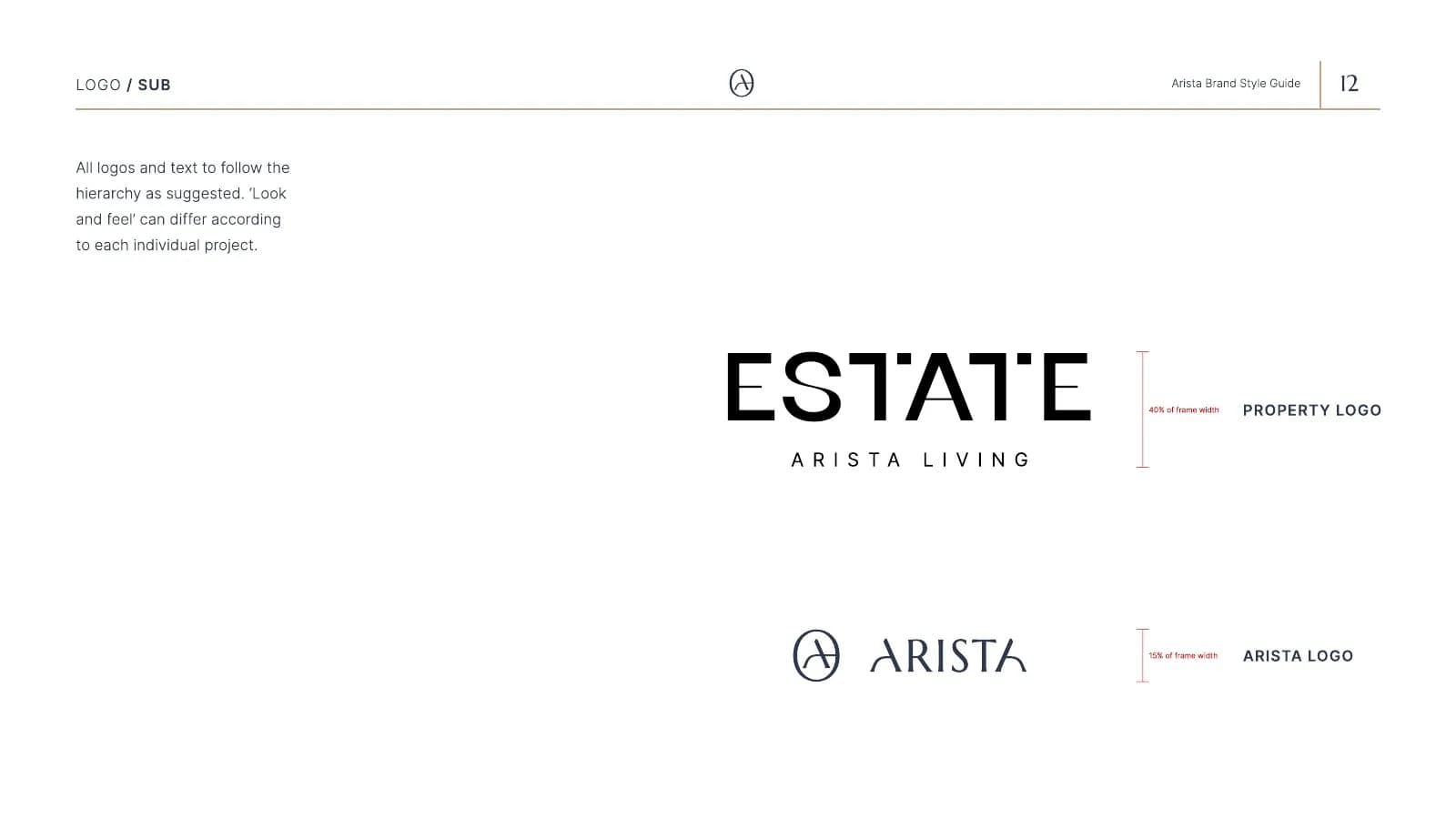
A lot of my work starts with a logo the client already has. I don’t need to redraw it to be useful. What usually happens: I rebuild the mark as a clean vector if it only exists as a JPG, fix any spacing that was off, and produce the versions that were never made: one-colour, reversed, a standalone icon. Then I write down clear space and a minimum size so it stops getting squashed into banners.
Around it I set a palette with values for print and screen, choose two typefaces with proper fallbacks for Canva and Google Slides, and build the templates you actually use, which is usually a deck, a few social formats and a document header. The last piece is the guide. Twelve pages is often enough for a small team; the seven sections it needs are the same at any size.
If there is something in the mark that will cause problems in print or at small sizes, I’ll tell you, and we decide together whether to fix it or live with it. That conversation is the difference between a refresh and quietly sliding into a rebrand nobody budgeted for.

When to keep what you have
Sometimes the honest answer is: do nothing yet. If the logo works, the colours are written down somewhere, the team mostly follows them, and the business hasn’t changed, you don’t need me. Spend the money on photography or on a better website instead. A new logo won’t fix a slow checkout.
A good designer will tell you that. I turn some projects away for exactly this reason, and I’d rather do that than sell someone a logo they don’t need.
What to do next
If you’re still unsure, book a 30-minute call and bring your logo files, your website and your deck. I’ll look at them with you and say which one I’d recommend and roughly what it would cost. If you already know it’s a refresh, tell me what you have and I’ll quote it. Either way you’ll leave with a clearer answer than “it depends”.
Questions founders ask me
Usually, yes. If the idea is sound I can rebuild it as a proper vector, fix the spacing and give you the missing versions. If it uses a Canva element you don’t have rights to, that’s a different conversation and sometimes the start of a rebrand.